The New Normal: Using AI During Live Job Interviews
The traditional job interview is undergoing a seismic shift. For decades, the measure of a candidate was their memory, their articulation, and their ability to think on their feet. Today, that script has been rewritten by a silent participant: Artificial Intelligence.
Recent surveys suggest that roughly 20% of job seekers are now utilizing AI tools in real-time during remote video interviews. From subtle teleprompter scripts to complex emotional intelligence prompts, the "AI-assisted interview" is no longer science fiction—it is a modern workplace reality.
How It’s Actually Being Done
When we talk about "AI in the interview," we aren’t just talking about practicing with ChatGPT the night before. We are talking about active, real-time implementation during the live call. Here is how candidates are currently gaining the edge:
1. The "Real-Time Teleprompter"
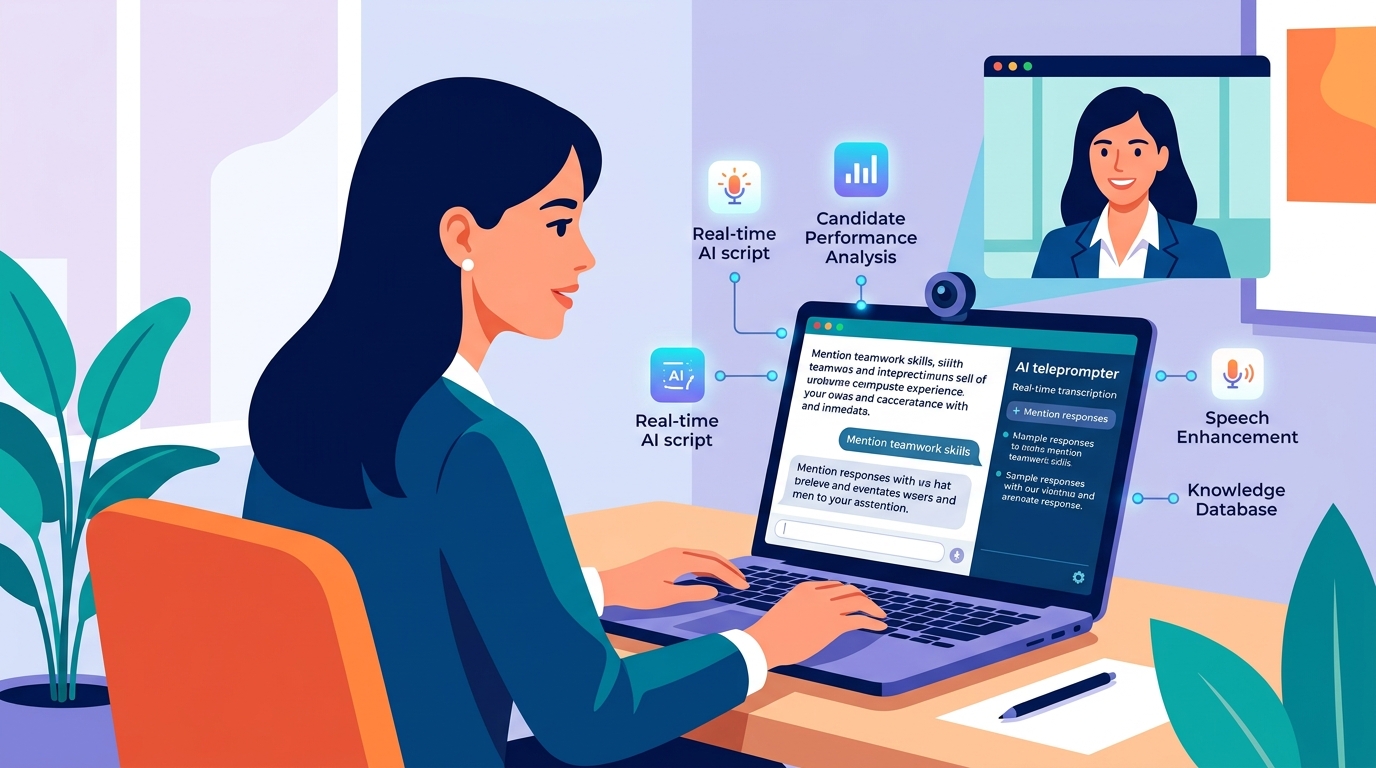
Candidates are using browser extensions and apps that transcribe the interviewer's voice, process it through an LLM, and project a suggested response onto the screen. This allows the seeker to answer technical questions with unprecedented accuracy without needing to memorize vast amounts of data.
2. Live Sentiment Analysis
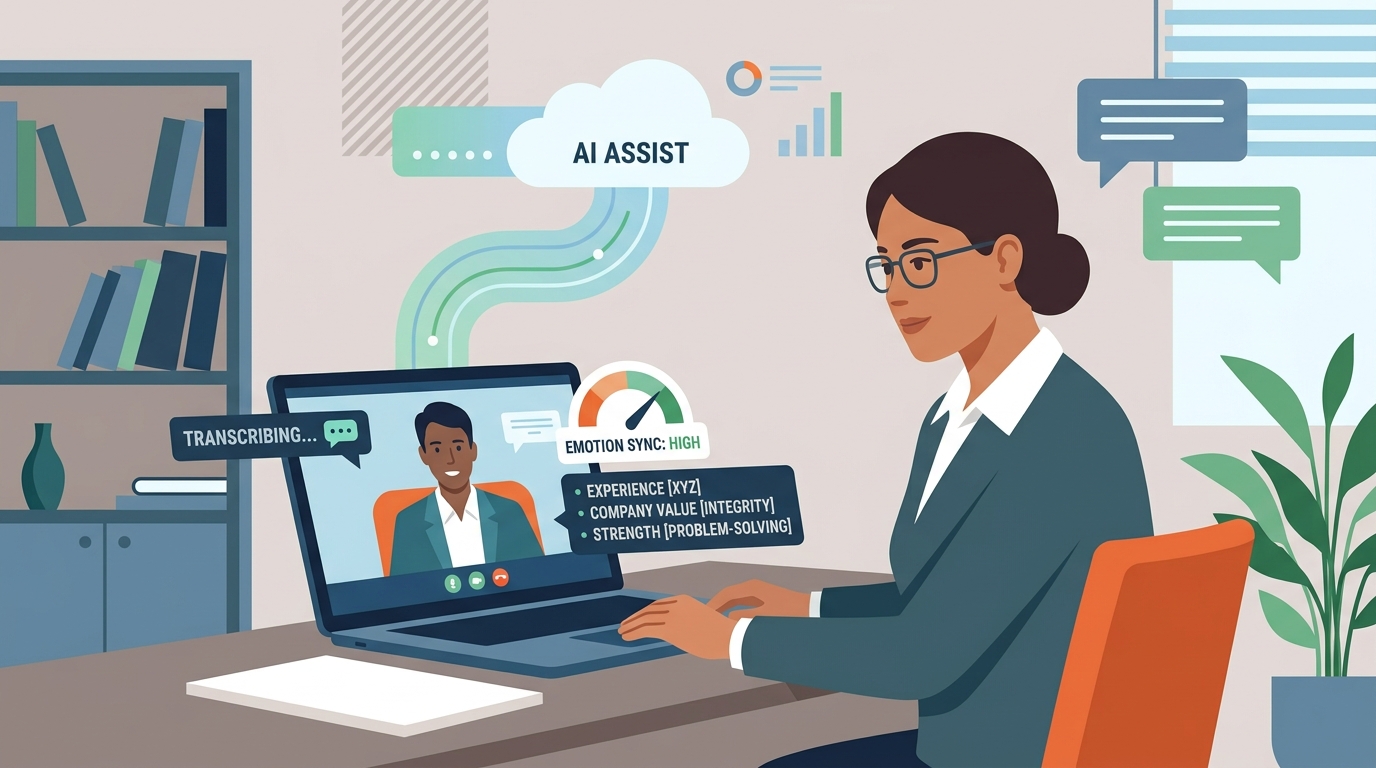
Some advanced users are leveraging tools that analyze the interviewer's facial expressions and tone of voice. These tools provide subtle feedback—like a green indicator for "Good" or an orange prompt to "Slow down/Provide more detail"—helping candidates adjust their tone in real-time.
3. Rapid Retrieval Engines
While answering behavioral questions, candidates use voice-to-text or side-window interfaces to pull up bullet points about their own resume or specific company projects, ensuring they never miss a detail.
Why Is This Happening? (And Is It Ethical?)
The rise of AI in interviews is largely a reaction to the complexity of the modern hiring process. As companies use AI to screen resumes and conduct automated initial assessments, candidates feel the need to level the playing field.
However, it brings up a fiery debate: Is it cheating?
The Pro-AI Argument: Proponents argue that using AI is simply a sign of being tech-savvy. If the job involves AI, knowing how to use it to optimize a task is a skill, not a handicap.
The Skeptic's View: Many hiring managers fear that if a candidate relies on AI to get hired, they lack the actual competency to perform once the screen is off and the real work begins.
The Risk: The "Hallucination" Trap
While 20% of job seekers are finding success with AI, there is a hidden danger: AI Hallucinations.
If you rely too heavily on a machine to feed you answers, you risk sounding like a robot. Worse, if your AI assistant spits out an incorrect fact or a technical inaccuracy, your credibility will vanish in seconds. Experienced interviewers are now trained to ask follow-up questions that probe the thought process behind the answer rather than the answer itself.
What Does This Mean for the Future of Hiring?
We are entering the era of the "AI-Resilient Interview." Expect to see:
More In-Person Meetings: Companies may pull back from remote-only interviews to ensure a candidate is authentic.
Case Studies and Whiteboarding: Real-time problem solving on a physical whiteboard (or screen-sharing tasks) that cannot be easily solved by a bot.
Practical Evaluations: Shifts from talking about the work to actually doing a small paid trial or practical assessment as the primary filter.
Final Thoughts
If you’re a job seeker, using AI for interview preparation—researching the company, identifying keywords, and practicing responses—is a smart, legitimate strategy. Using it as a live "puppet master," however, carries risks that could cost you your reputation.
The best tool in an interview is still a well-prepared, authentic human being. AI can open the door, but your genuine personality is what closes the deal.