7.5 Mistakes People Make During Online Interviews (And Why They Cost You the Offer) - EasyBreasy.Work
Online interviews feel easier than in-person ones.
You’re at home.
And yet - thousands of candidates walk away from Zoom or Google Meet calls thinking:
“I could have done better.”
In today’s hiring market, especially in tech interviews , small mistakes compound quickly. Sometimes it’s not your skills that fail you - it’s execution.
Here are
EasyBreasy.Work
2025 EasyBreasy.Work. All rights reserved.
7.5 mistakes people make during online interviews
The last one? Small. Almost invisible. But surprisingly powerful.
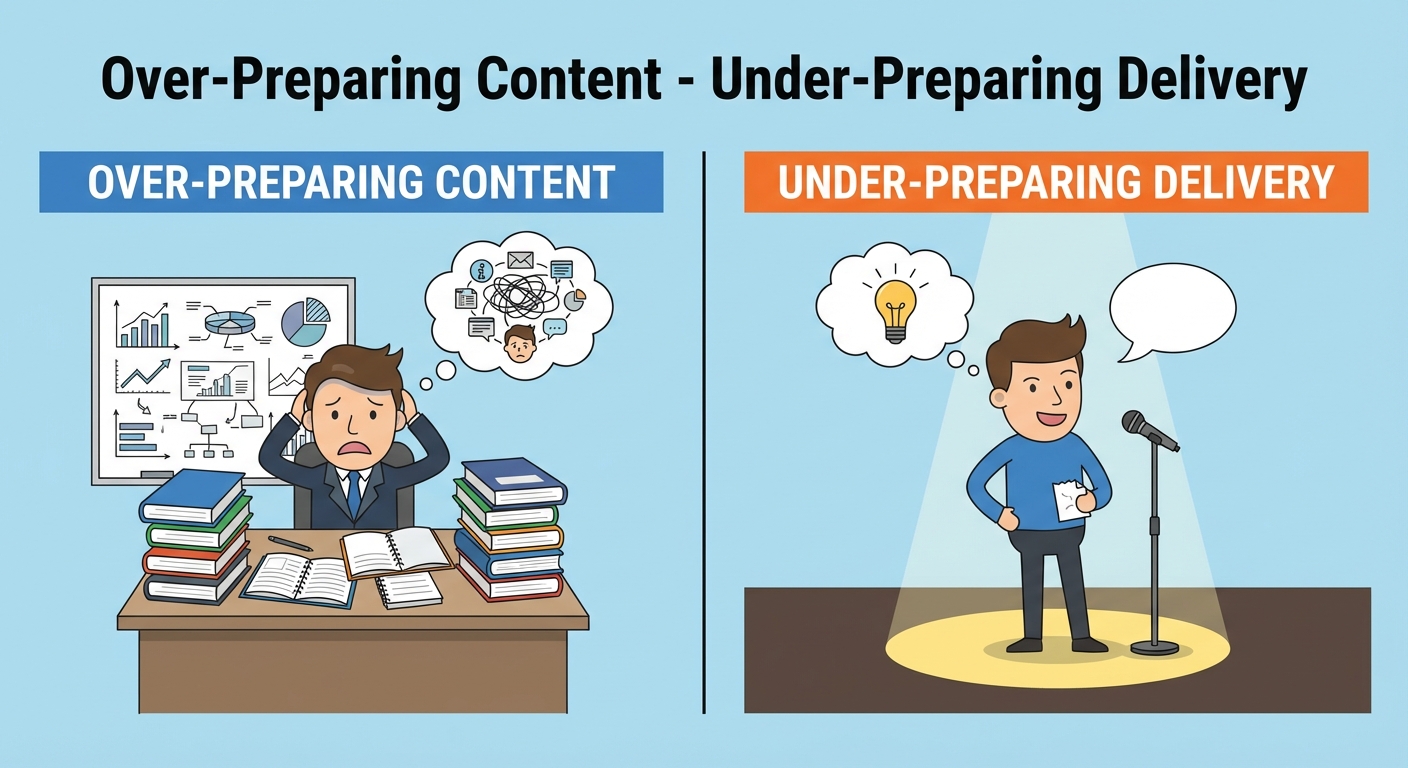
1. Over-Preparing Content - Under-Preparing Delivery Most candidates prepare answers .
definitions
algorithms
behavioral frameworks
project stories
But they don’t practice delivering them live .
Online interviews are performance environments. Under stress, memorized answers can sound robotic, rushed, or disconnected.
Interviewers don’t just evaluate correctness. They evaluate:
clarity
structure
confidence
flow
If your delivery collapses under pressure, your preparation doesn’t fully translate.
Fix: communication , not just your memory.
2. Talking Too Much (Or Too Little) In online interviews, silence feels heavier.
Some candidates panic and start over-explaining everything. Others become overly brief and appear uncertain.
Over-explaining can signal:
lack of structure
insecurity
inability to prioritize
Under-explaining can signal:
weak understanding
low confidence
poor communication
The sweet spot is structured clarity:
Direct answer
Brief reasoning
Optional expansion if needed
Online interviews reward precision.
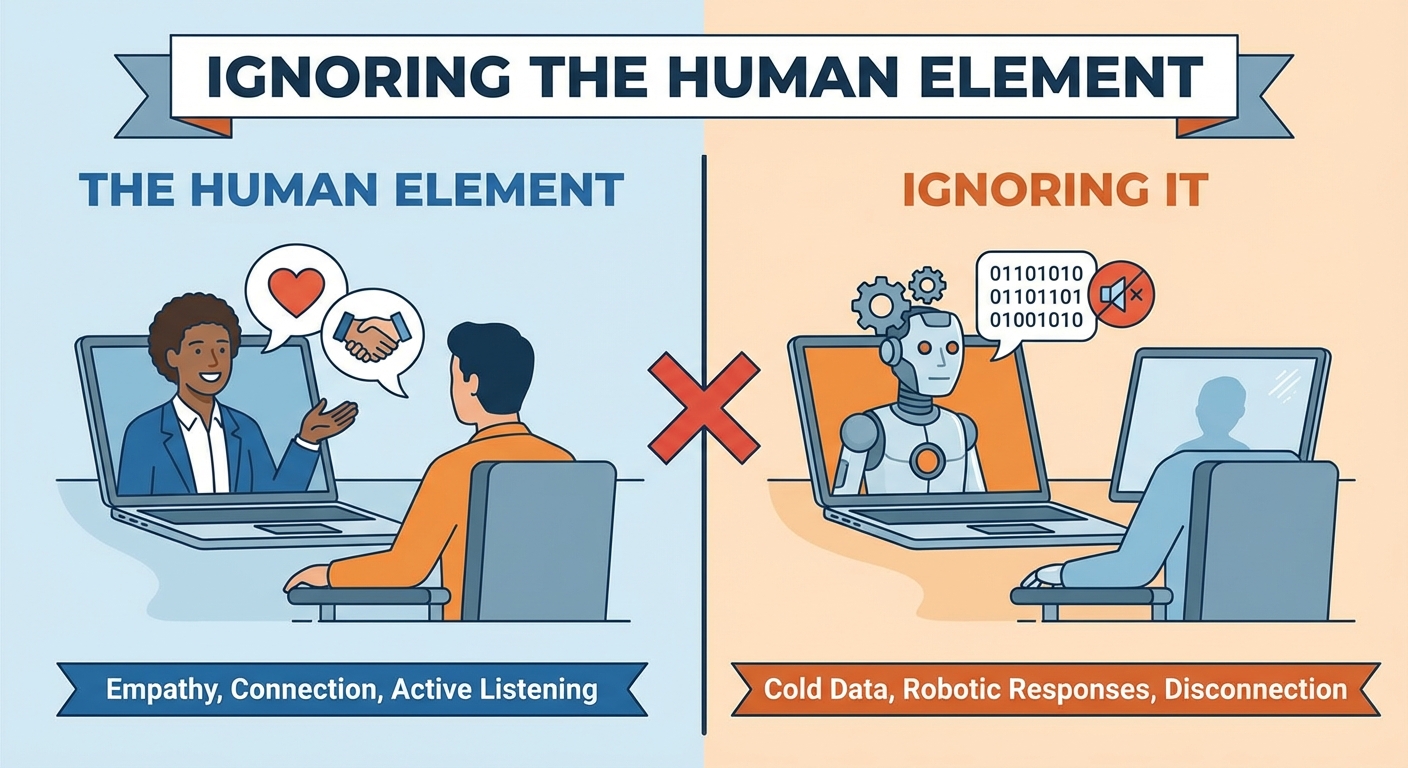
3. Ignoring the Human Element Tech interviews are still human interactions.
Candidates often focus so much on solving the problem that they forget:
eye contact (camera awareness)
tone
facial expressions
engagement
In virtual environments, these cues matter even more because energy doesn’t transfer naturally through a screen.
If you sound flat, disconnected, or overly mechanical, interviewers subconsciously register it.
You’re not just solving tasks.
4. Letting Interview Anxiety Take Control Interview anxiety affects the majority of candidates. Stress impacts:
working memory
recall speed
verbal fluency
You might know the concept - but your brain goes blank.
Online interviews amplify this because:
you see yourself on screen
you can’t read body language clearly
small silences feel amplified
When anxiety spikes, performance drops.
And here’s the painful part:
Often, the interviewer doesn’t see your potential - only your performance in that moment.
Managing stress is a skill, not a personality trait.
5. Treating It Like an Exam Instead of a Collaboration Many candidates approach online interviews like school exams.
They think:
But most companies want to see:
how you think
how you clarify requirements
how you adapt
how you collaborate
If you go silent trying to find the perfect answer instead of thinking aloud, you miss the opportunity to demonstrate reasoning.
Online interviews are closer to pair programming than final exams.
Speak your thoughts. Structure your reasoning. Invite micro-feedback.
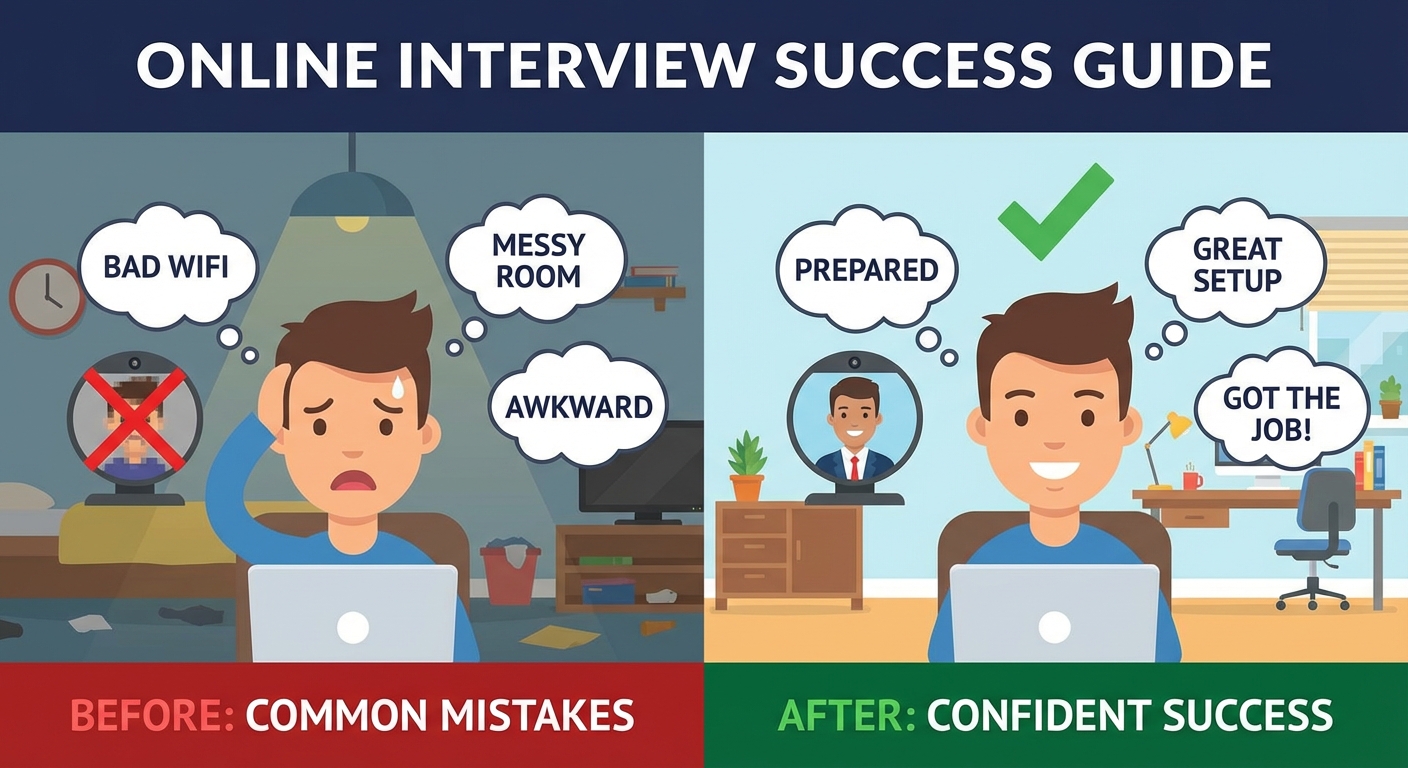
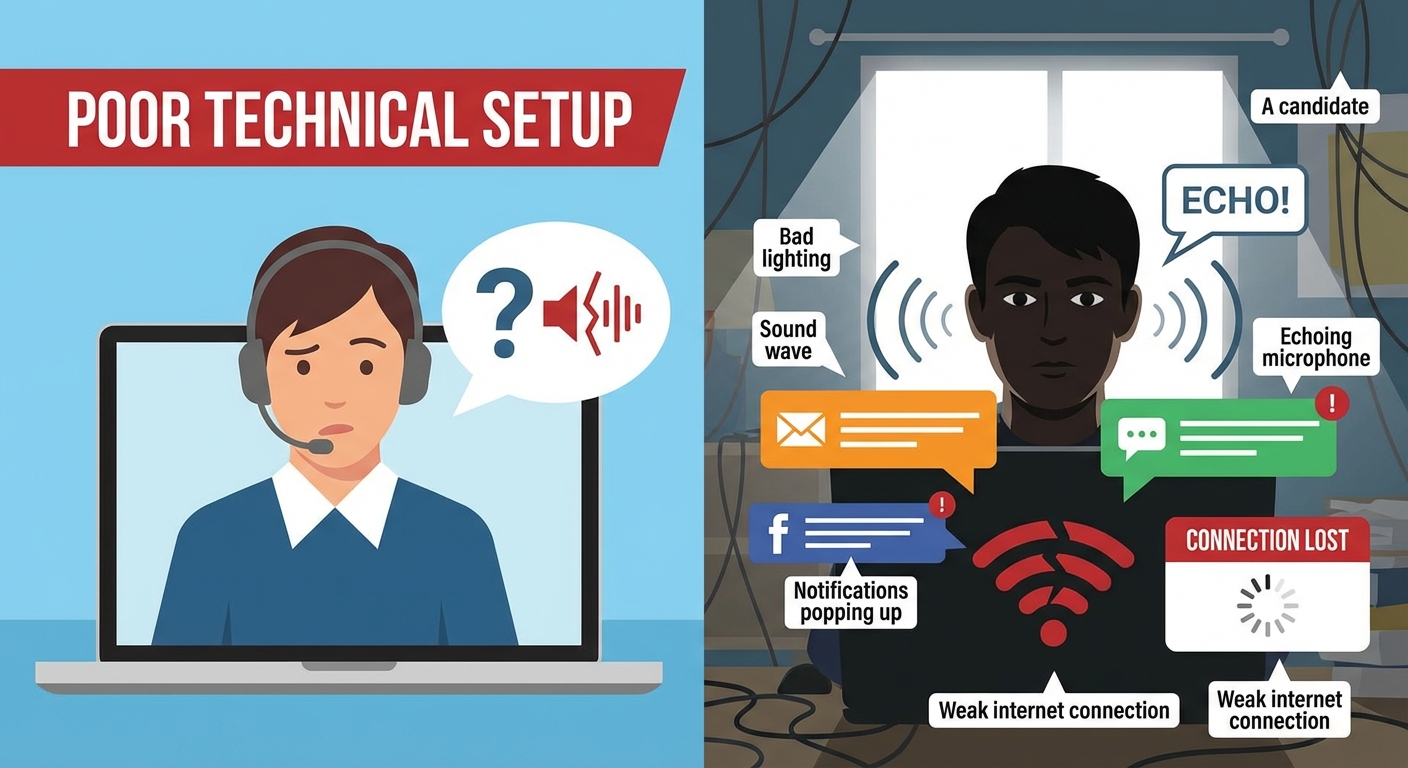
6. Poor Technical Setup (Yes, It Still Happens)
It sounds basic - but it still affects perception.
Even subconsciously, interviewers associate:
clean setup → professionalism
chaotic setup → lack of preparation
stable connection
clear audio
neutral background
no distractions
Online interviews are visual experiences. Control what you can control.
7. Forgetting That Interviews Are Signal Compression An interview is a compressed signal.
In 45–60 minutes, interviewers must decide:
Can this person solve problems?
Can they communicate clearly?
Would we trust them in production?
Would we enjoy working with them?
That’s enormous compression.
Small behaviors get magnified:
hesitation
disorganization
defensive reactions
visible panic
You are not being judged as a human being — but your behavior under pressure is being extrapolated.
That’s why composure and structure matter so much.
7.5 The “Small” Mistake That Matters More Than You Think
Not Pausing Before You Answer Many candidates respond instantly to questions — especially in technical interviews.
They feel pressure to prove competence quickly.
But answering too fast can:
make you sound reactive
reduce clarity
increase mistakes
amplify anxiety
A 2-second pause changes everything.
thoughtfulness
composure
confidence
Silence is not weakness.
That small pause can stabilize your nervous system and improve your structure instantly.
It’s only “half a mistake” because it’s easy to fix.
But it influences everything else.
Why These Mistakes Happen More in Online Interviews Remote environments remove natural feedback loops.
full body language
subtle nods
room energy
This uncertainty increases cognitive load.
career pressure
financial pressure
time constraints
And the nervous system activates.
Most interview failures are not knowledge failures.
They are execution failures.
The Bigger Picture Online interviews are now standard in global hiring.
Competition is higher.
The difference between “almost” and “offer” often lies in small behavioral gaps.
You don’t need to become someone else.
communicate clearly
regulate stress
structure answers
control small details
Master those - and your skill finally shows.
Final Reflection Think about your last interview.
Which mistake felt familiar?
Most people recognize at least two or three.
All of them are trainable.
And once you become aware of them, you immediately improve.
Online interviews aren’t just knowledge tests.
They’re performance environments.
Treat them that way - and your results change.


 Bad lighting.