How to Recover When Your Mind Goes Blank During Interviews
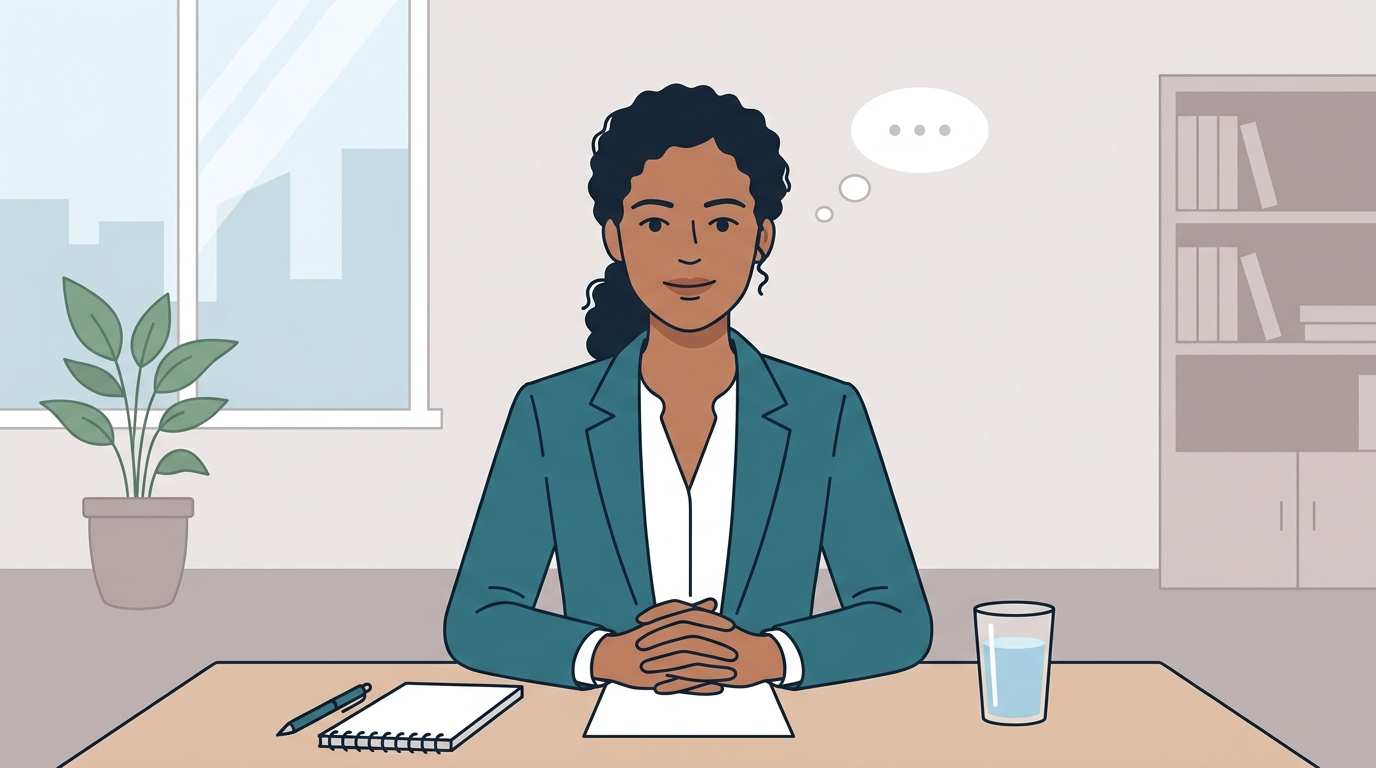
We’ve all been there. You’re sitting in the hot seat, the interviewer asks a question that seems simple enough, and suddenly—nothing. Your mind goes completely blank. The silence stretches, your heart starts racing, and you feel the panic rising.
Don’t worry. A "brain freeze" isn't a death sentence for your candidacy. In fact, how you handle that moment of silence can tell an interviewer more about your resilience and problem-solving skills than a perfectly rehearsed answer.
Here is how to recover gracefully and keep your cool when your brain decides to take a coffee break.
1. Stop the Panic Spiral
The moment you realize you’re stuck, your body’s "fight or flight" response kicks in. If you panic, you’ll likely babble or apologize profusely, which only makes you feel more flustered.
The Fix: Take a slow, deep breath. It sounds cliché, but it physically resets your nervous system and buys you three to five seconds of "thinking time." It also makes you look thoughtful rather than panicked.
2. Use the "Bridge" Technique
Never feel pressured to answer immediately. Silence is a powerful tool, but if you need a moment to gather your thoughts, use a verbal bridge to signal that you are engaging with the question.
Try phrases like:
"That’s a thought-provoking question. Let me take a second to structure my thoughts on that."
"I want to give you the most accurate answer possible, so let me think about the best example for that."
"That’s an interesting angle. Give me a moment to consider how that applies to my experience."
3. Ask for Clarification
Sometimes a brain freeze happens because the question is too broad or you aren’t quite sure what they are looking for. Turning the question back on the interviewer is a strategic move that saves you time and shows you’re detail-oriented.
Ask: "Could you clarify what you mean by [X]?" or "Are you looking for an example related to my technical experience or my leadership style?" This gives you more context and gives your brain a chance to "wake up" while they speak.
4. Don’t Be Afraid to Pivot
If you start an answer and realize halfway through that you’ve lost the thread, don’t try to force a conclusion that makes no sense. It is perfectly professional to say:
"Actually, let me step back and rephrase that."
Admitting you want to provide a better, more concise answer shows self-awareness and a commitment to quality.
5. Prepare "Pocket Stories"
The best way to prevent a brain freeze is to have a mental library of stories ready to go. Use the STAR method (Situation, Task, Action, Result) to prepare 3–5 versatile stories that can be adapted to almost any behavioral question.
When you have a framework ready, your brain doesn't have to "invent" an answer on the spot—it just has to retrieve one of your pre-baked stories.
Final Thoughts: It’s Just a Conversation
Remember, an interview is a two-way street. The people across the table are human, too; they have likely experienced their own brain freezes and awkward moments. If you stumble, acknowledge it with a smile, take a breath, and move forward.
Confidence isn't about being perfect—it’s about how you handle the imperfections. You’ve got this!