Mastering Behavioral Interviews: The Ultimate STAR Method Guide
We’ve all been there. The hiring manager leans forward, clicks their pen, and drops the dreaded line: "Tell me about a time you failed and how you handled it."
Your palms start to sweat, your mind goes blank, and suddenly, your five years of professional experience feels like a hazy dream. Behavioral interview questions are designed to test your soft skills—how you handle conflict, deadlines, and failure—but they don't have to be a source of terror.
With the right framework, you can turn any question into a polished success story, even when you're caught off guard.
1. Understand the "Why"
Behavioral interviews operate on a simple premise: Interviewers aren't looking for a perfect story; they are looking for your . How do you troubleshoot? How do you treat teammates? How do you react when the project goes off the rails?
Past behavior is the best predictor of future performance.
process
Once you realize the interviewer is just looking for a clear, logical thought process, the pressure to be "perfect" disappears.
2. The Golden Rule: Use the STAR Method
If you take away only one thing from this post, make it the STAR method. It provides a structural scaffold that keeps your answer focused and prevents you from rambling.
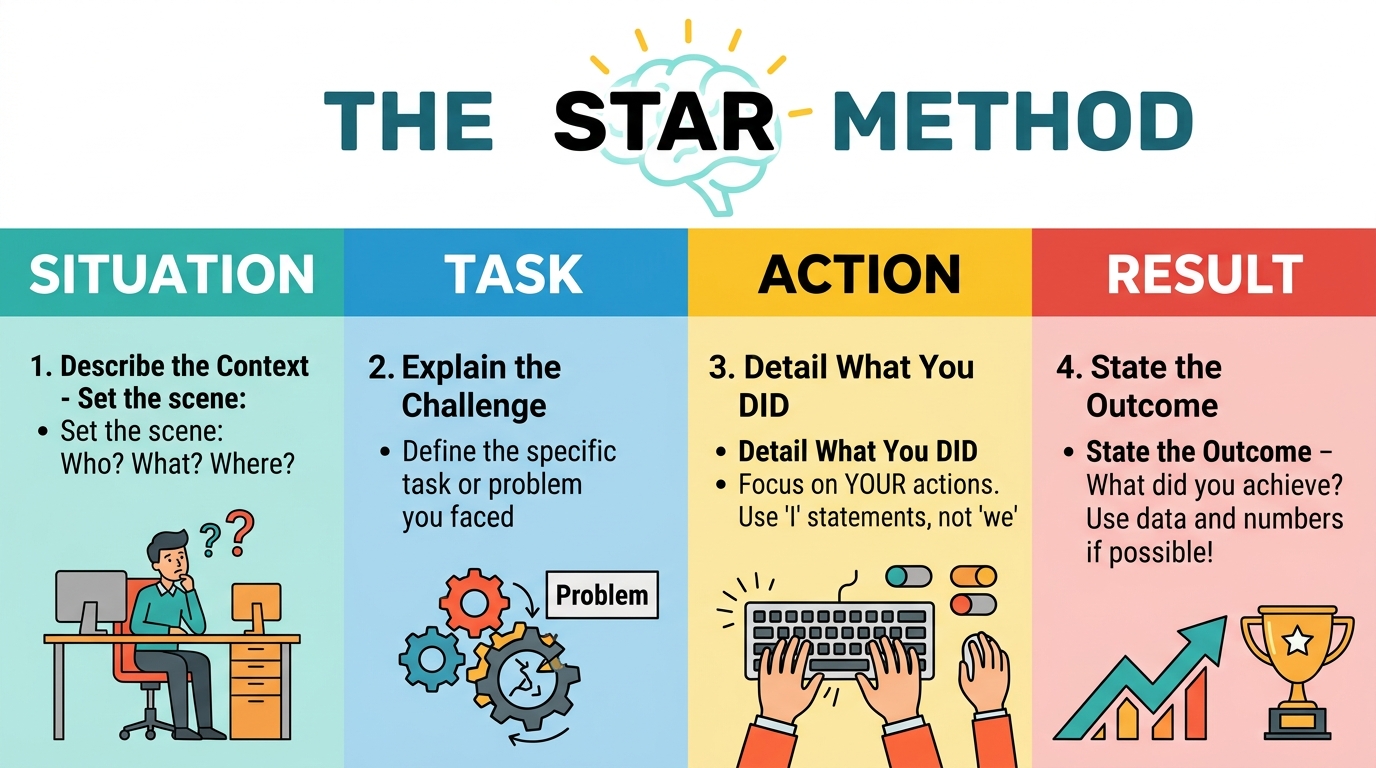
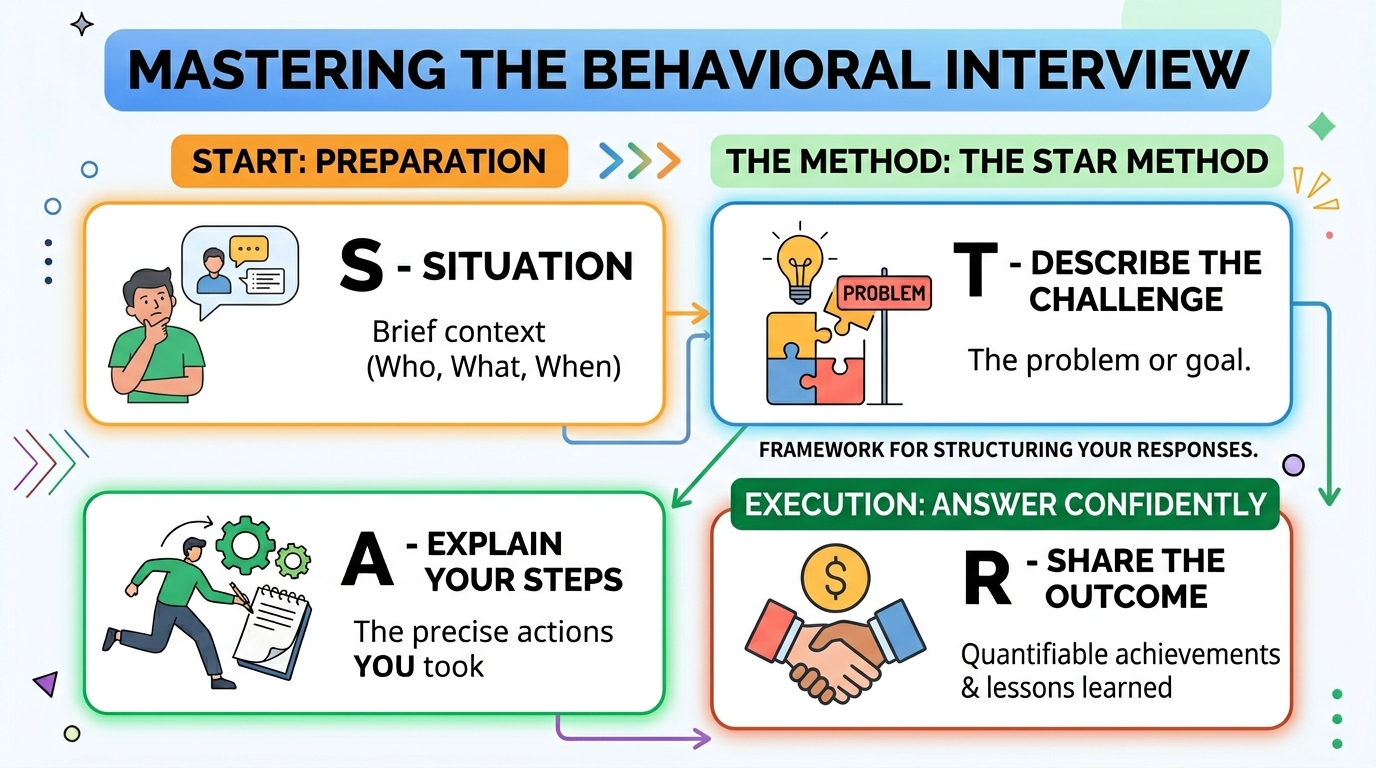
S (Situation): Set the stage. Be brief—who, what, where?
T (Task): Describe the challenge you were facing. What was the goal?
A (Action): The most important part. Focus on what YOU did. Use "I" statements, not "we."
R (Result): What was the outcome? Use numbers if you can. Did you save time? Improve morale? Generate revenue?
3. Preparing a "Mental Bank" of Stories
You don’t need to memorize answers for 100 different questions. Instead, prepare 5 to 7 versatile stories from your career that can be molded to fit almost any behavioral prompt.
Common categories include:
The Conflict: A time you disagreed with a manager or peer.
The Win: A project that required innovation or extra effort.
The Failure: A mistake you made and, more importantly, what you learned.
The Pivot: A time you had to adjust to a major change or obstacle.
By keeping these stories in your back pocket, you can quickly adapt one of them to almost any question that comes your way.
4. Don’t Fear the Silence
When a question catches you off guard, don't feel the need to start talking immediately. It is perfectly professional to say:
"That’s a great question. Let me take a moment to think of the best example."
Taking 5–10 seconds to compose your thoughts shows confidence and self-awareness. It’s much better to take a breath and structure a coherent answer than to start talking and lose your way mid-sentence.
5. End on a High Note
The "Result" part of your STAR answer is your final impression. Ensure it connects back to the lesson learned or the value you added. Even when discussing a "failure," ensure your story focuses on how you corrected the path or how you’ve implemented new habits to ensure that same problem never occurs again.
Final Thoughts
You are the expert on your own career. You’ve faced challenges, you’ve hit milestones, and you’ve grown from your mistakes. Behavioral interviews are simply a platform for you to tell those stories. Keep your structure simple, stay focused on your specific contributions, and remember: they’re inviting you to talk about the person they’ve already determined is qualified on paper.
Now, go in there and show them exactly why you’re the right person for the job!