We’ve all been there: The interviewer asks a broad question like, "Tell me about a time you faced a difficult challenge," and your mind goes blank—or worse, you start rambling.
Enter the STAR Method. It is the gold standard for behavioral interviewing, designed to help you deliver concise, evidence-based answers that impress hiring managers. Whether you are a fresh graduate or a seasoned executive, mastering this structure is your ticket to a job offer.
What is the STAR Method?
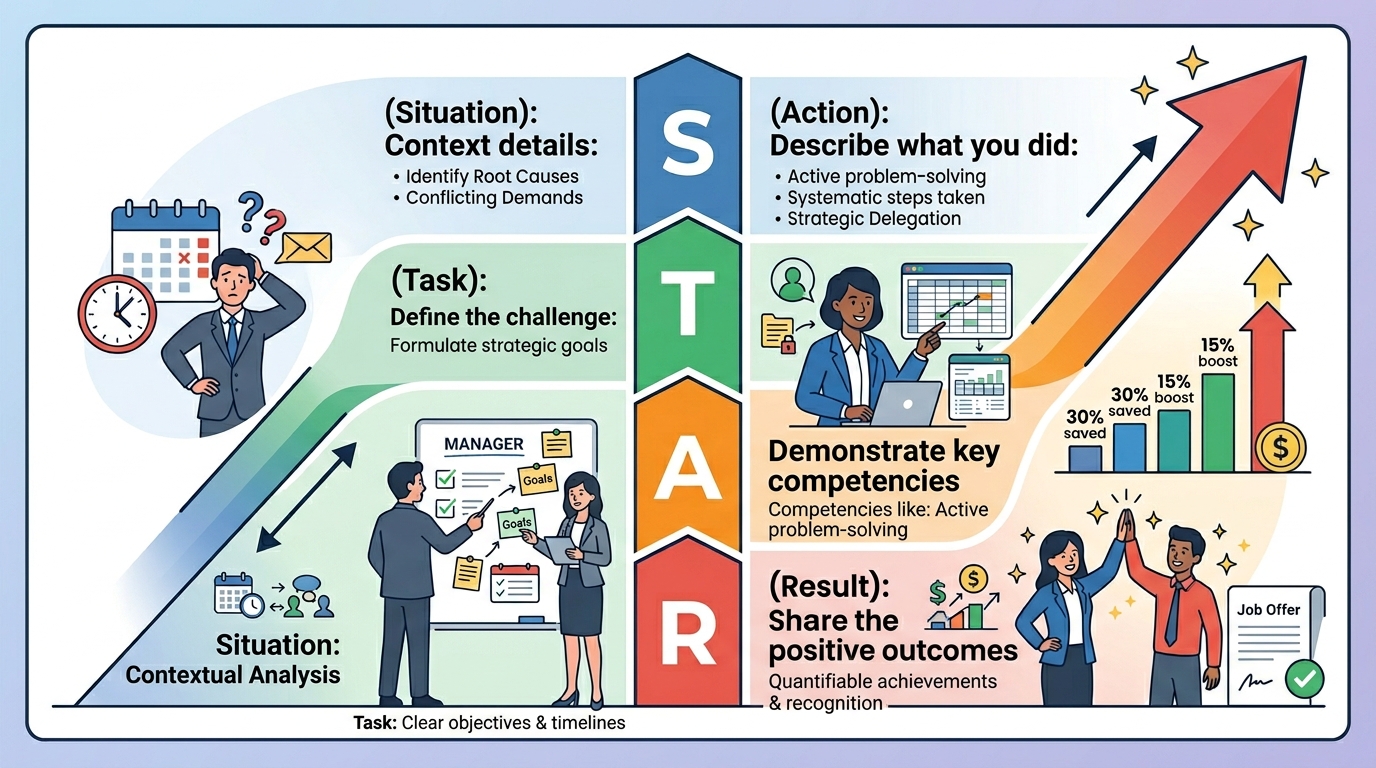
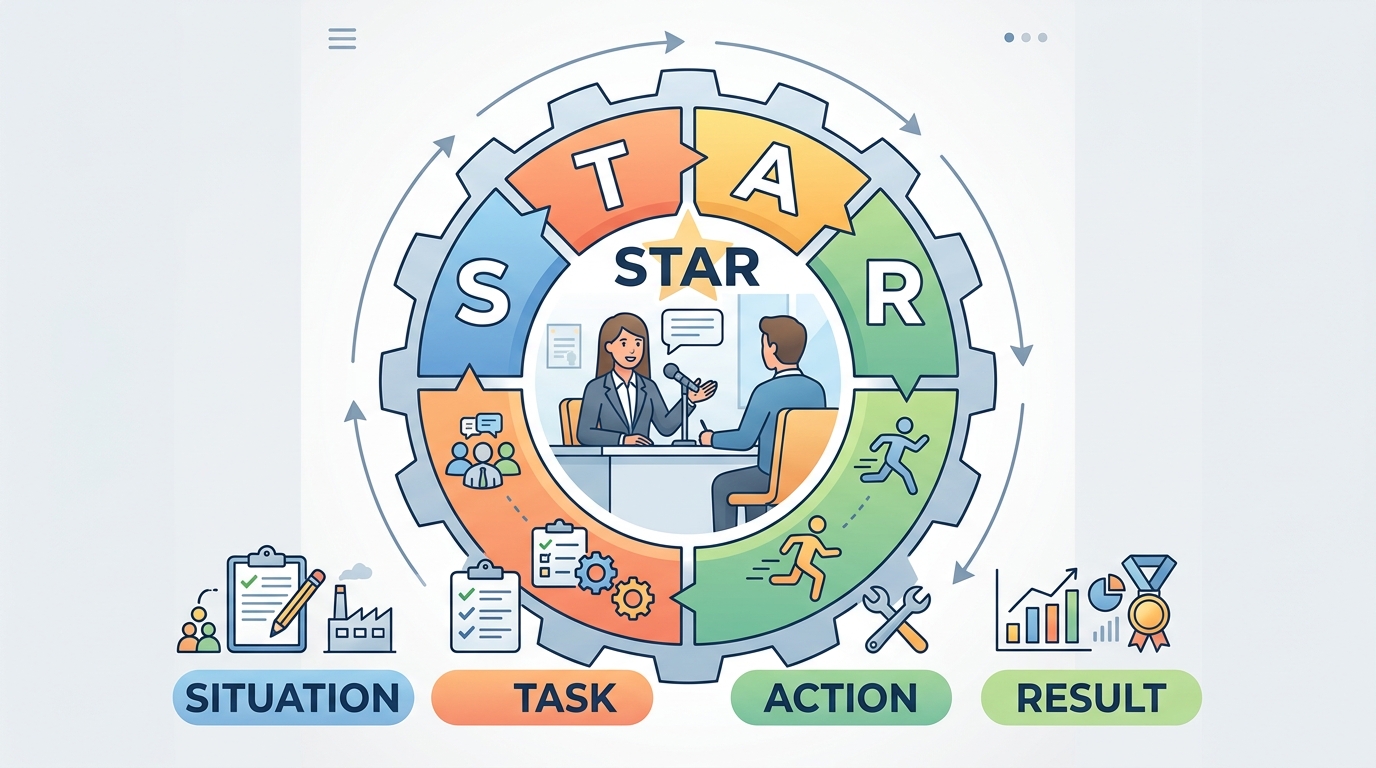
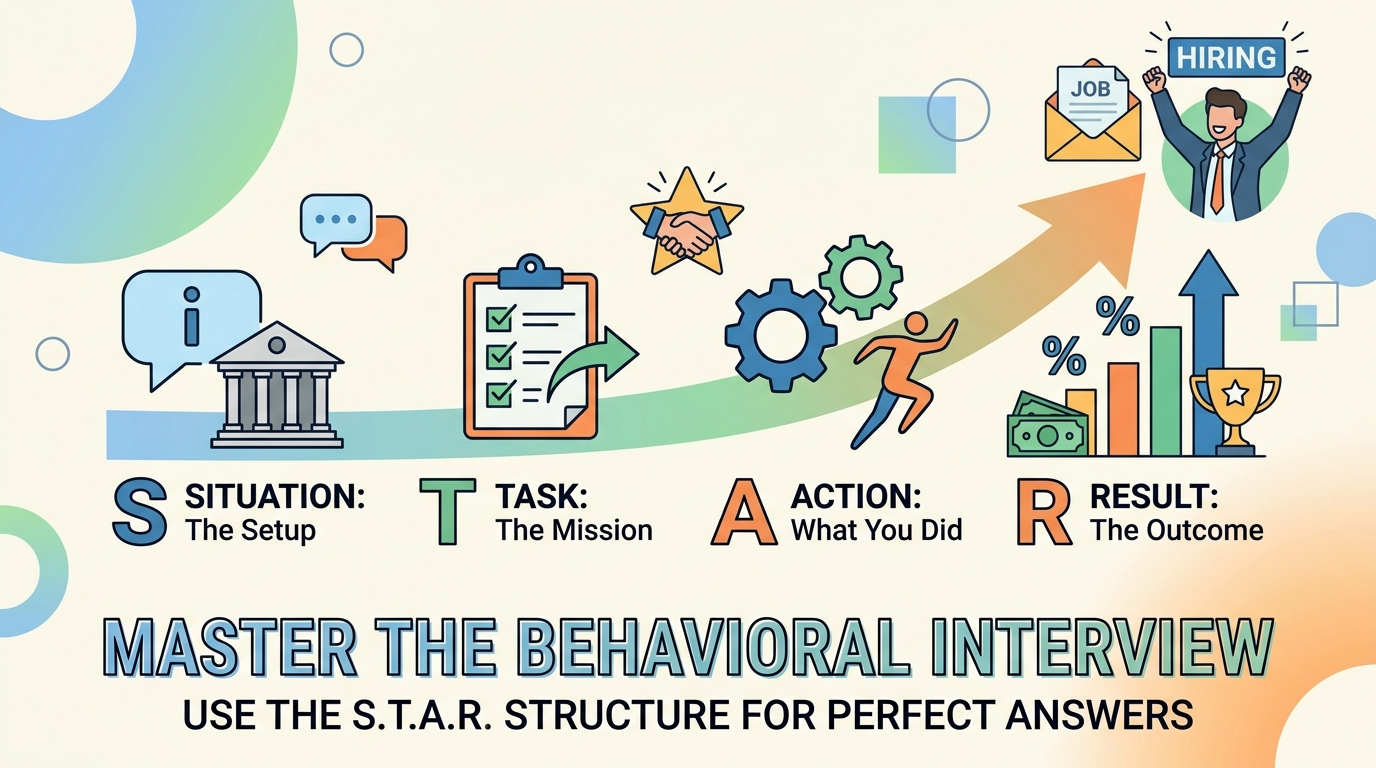
STAR is an acronym that helps you organize your thoughts into a clear narrative. By breaking your response down into four distinct parts, you ensure that you don't miss key details and—more importantly—you don't get lost in the weeds.
S (Situation): Set the stage.
T (Task): Describe what needed to be done.
A (Action): Explain exactly what you did.
R (Result): Share the positive outcome.
Breaking Down the STAR Components
1. Situation: Set the Context
Don't write a novel. Give the interviewer just enough information to understand the setting. Keep it brief, factual, and relevant to the skills they are hiring for.
Example: "In my previous role as a project manager, we were behind schedule on a major software launch due to a sudden technical setback."
2. Task: Define the Challenge
What was your specific goal? Be clear about the stakes. Did you have a deadline? A difficult stakeholder? A budget constraint?
Example: "I was tasked with identifying the root cause of the error and restructuring our workflow to hit the original deadline."
3. Action: The "Me" Focus
This is the most important part of your answer. Focus on your specific contributions. Avoid saying "we" whenever possible; the interviewer wants to know how you performed. Describe the steps you took and the logic behind your choices.
Example: "I held an emergency team meeting to identify bottlenecks, re-prioritized the remaining tasks, and implemented an agile sprint to increase output."
4. Result: Show the Impact
Always end on a high note. Quantifiable data—such as percentages, money saved, or hours reduced—works best. Even if the project wasn't a total success, focus on what you learned or how you improved the situation.
Example: "As a result, we not only met the deadline, but we also identified a process flaw that ended up saving the company 10% in operational costs moving forward."
Quick Tips for Success
Prepare your stories in advance: Before the interview, identify 5-7 core experiences (like "a time you led a team" or "a time you failed") and map them to the STAR framework.
Keep it focused: An ideal STAR answer should last about 60 to 90 seconds.
Be authentic: Don't memorize a script word-for-word. Keep bullet points in your notes and practice speaking naturally.
Final Thoughts
The beauty of the STAR method is that it removes the guesswork from interview preparation. When you structure your answers effectively, you show the interviewer that you are organized, analytical, and ready to take on the challenges of the role.
Start practicing today, and watch your confidence grow as you walk into your next interview. You’ve got this!