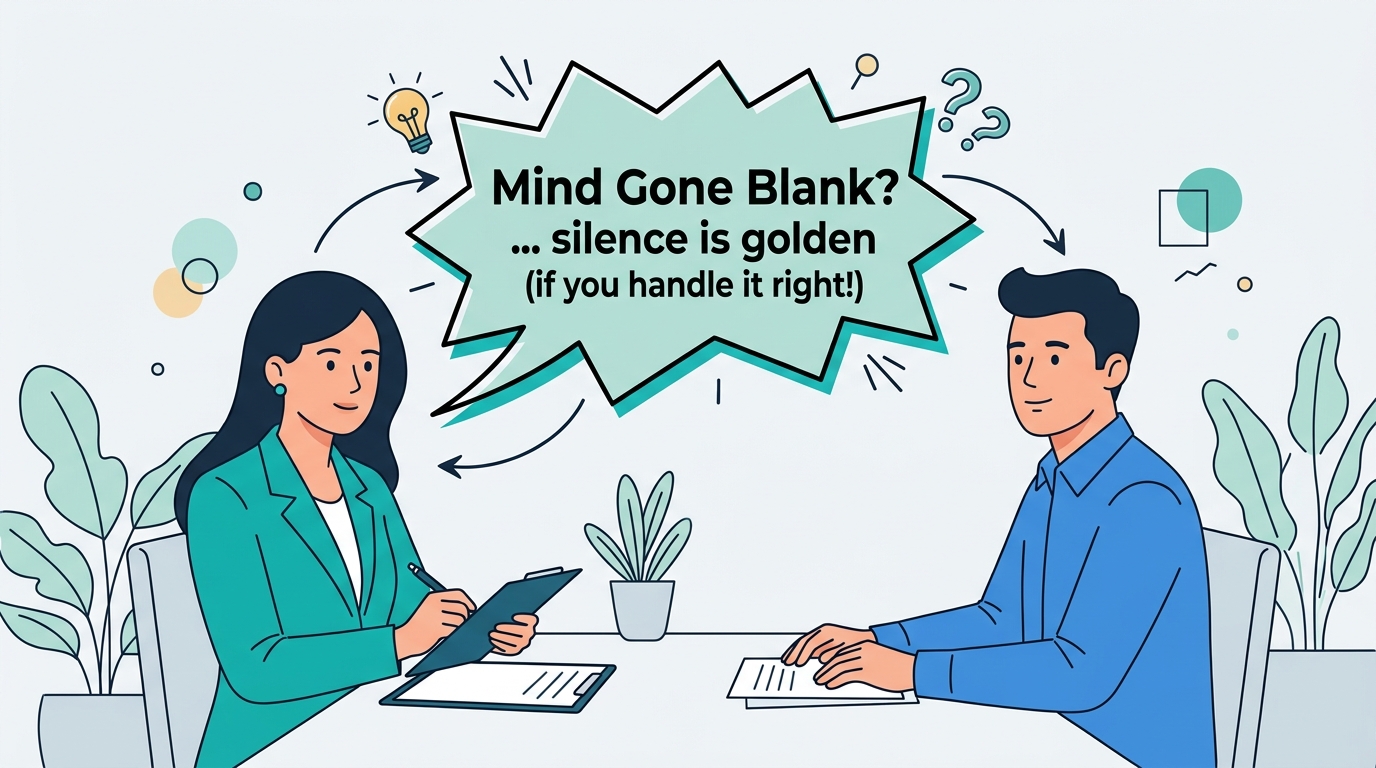
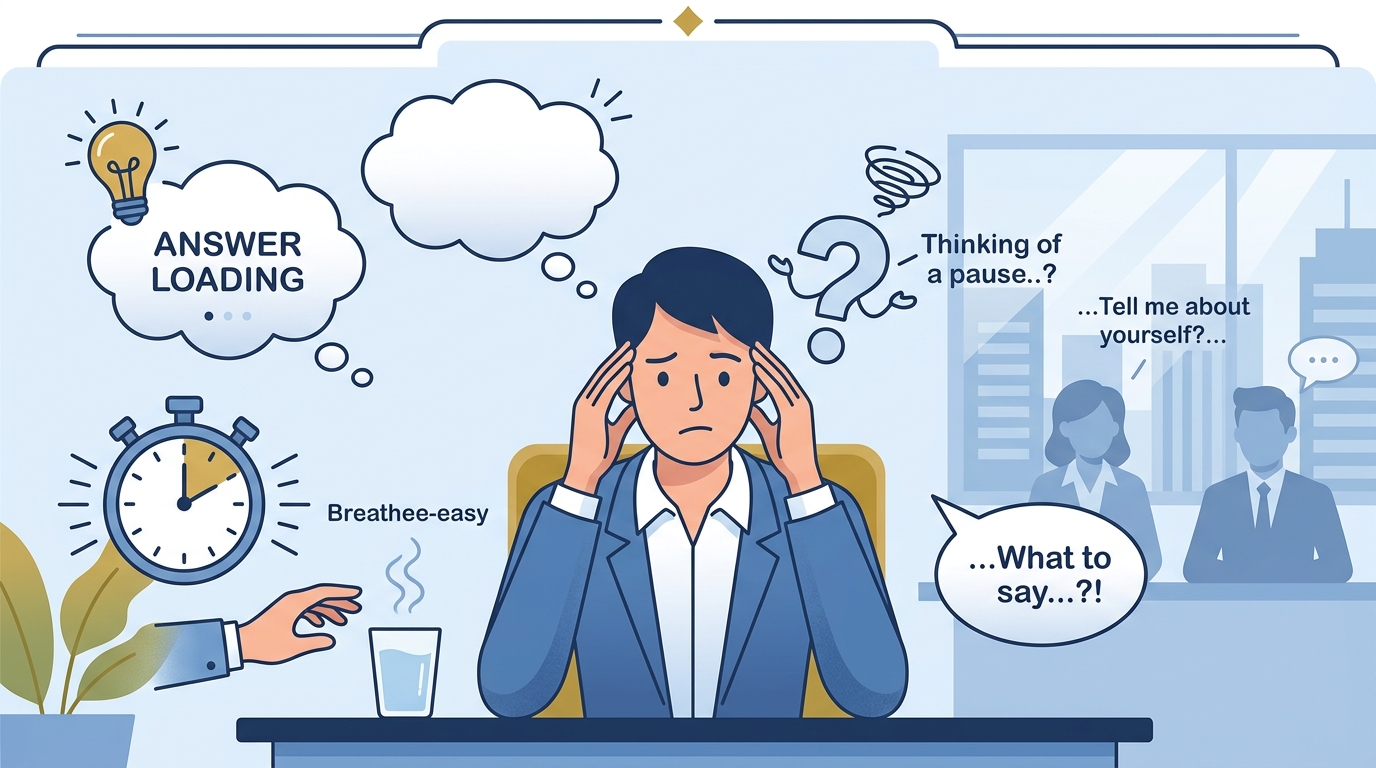
We’ve all been there. You’re sitting in an interview chair (or staring into a Zoom camera), and the recruiter asks a complex question. Suddenly, your brain hits a hard wall. The internal monologue turns from "I have a great answer for this" to "I have absolutely no idea what they just asked."
Don't panic. Silence isn't the enemy—it’s how you fill that silence that defines your interview success. Here is your game plan for handling a "mental blackout" like a pro.
1. Don’t Fill the Silence with Panic
When your mind goes blank, the urge to ramble is overwhelming. Fight it. Rambling shows nervousness and lack of structure.
Instead, buy yourself some thinking time. A brief pause—five to ten seconds—actually makes you look more thoughtful, not less intelligent. Use a simple transition phrase to ground yourself:
"That’s an interesting question. Let me give that a moment of thought."
"I want to make sure I give you a comprehensive answer. May I take a second to structure my thoughts?"
2. Paraphrase or Ask for Clarification
If the question was confusing, you don’t need to answer it immediately. Sometimes, restating the question buys you time while also ensuring you're actually addressing the interviewer's specific intent.
Try saying, "If I understand you correctly, you’re asking about how I prioritize tasks under strict deadlines—is that right?"
This gives you a few extra seconds to process and prevents you from answering a question you didn’t actually hear.
3. The "Bridge and Connect" Strategy
If you’ve stalled and the silence is still lingering, pivot. Connect the question to something you are prepared for.
If they ask about a technical skill you haven't mastered yet, talk about how you’ve approached similar complex problems in the past. If you can't think of a specific anecdote, talk about the principles you follow. By shifting from the "What" to the "How," you maintain control of the conversation.
4. Honesty is Better Than Blatant BS
There is nothing worse than making up a fake story only to get caught in a follow-up question. If you genuinely do not have experience in a specific area, admit it gracefully.
"I haven't encountered that specific scenario in my career thus far, but based on my experience with [Related Task], here is how I would approach it..."
5. Recover and Move On
One bad answer does not define your entire interview. Most interviewers are looking for how you handle pressure—not whether you are a walking encyclopedia. If you stumble, acknowledge it briefly and then show up strong for the next question.
"Actually, now that I think about it, there is a better example from a project I worked on last year..."
Feel free to circle back later in the conversation. It shows self-awareness and attention to detail.
Summary Checklist
Pause: Take a deep breath; silence is better than filler noise.
Confirm: Clarify the question to align expectations.
Bridge: Pivot to your strengths if you’re unsure of the details.
Stay Calm: One "I don't know" won't tank the interview—but losing your composure might.
Remember: Interviews are a two-way street. A "blank moment" is just a brief stop on the road—not a dead end. Keep your head held high, breathe, and tackle the next question with confidence!