Is Using AI in Online Interviews Considered Cheating?
The job interview has long been considered the ultimate test of a candidate's wit, preparation, and authentic personality. However, the rise of generative AI has introduced a disruptive new variable into the equation.
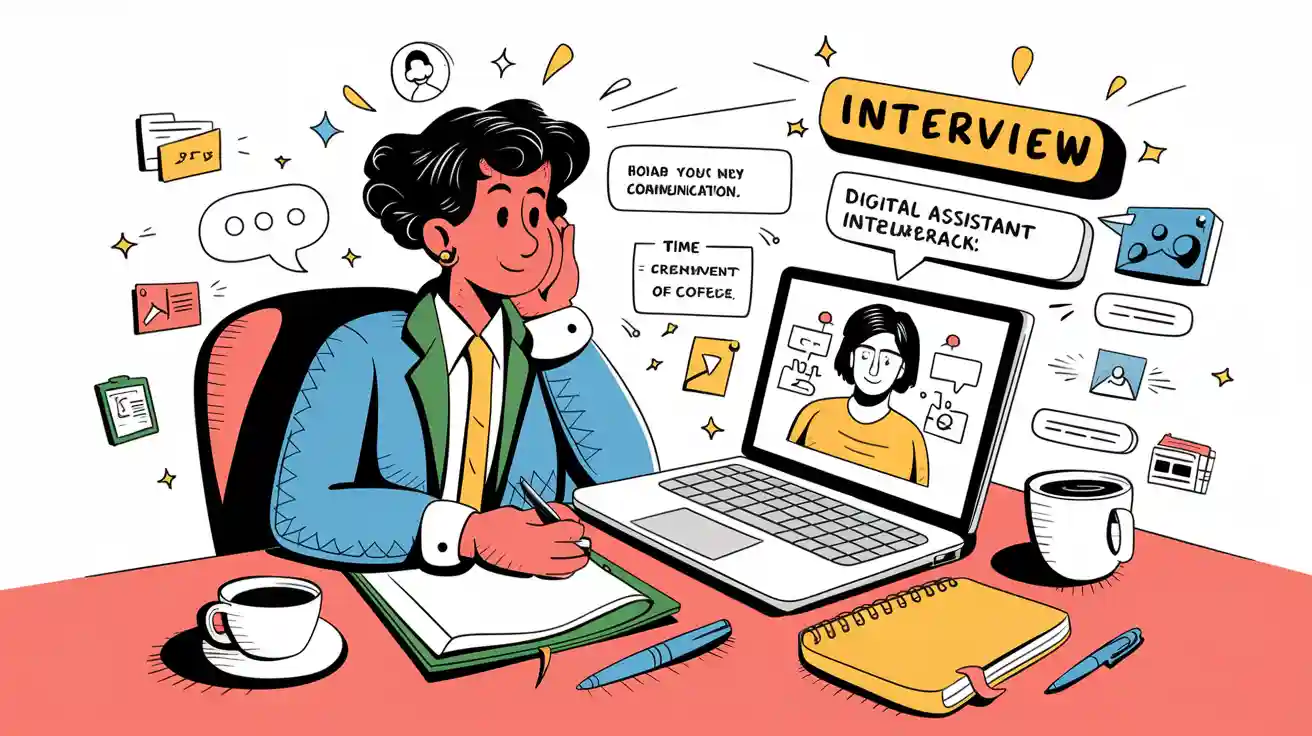
Picture this: A candidate sits in front of their laptop for a high-stakes Zoom interview. On a second monitor, an AI assistant is listening to the interviewer’s questions in real-time, transcribing them, and generating perfect, bulleted talking points within seconds. The candidate reads these responses smoothly, appearing knowledgeable, composed, and impeccably prepared.
Is this a brilliant display of resourcefulness and "working smarter," or is it a fundamental breach of professional ethics? As the line between human intelligence and machine assistance blurs, the recruitment world is grappling with a difficult question: Is using AI during an online interview cheating?
The Rapid Rise of the AI-Augmented Candidate
The use of AI in the job search is no longer a niche trend; it is becoming the standard. According to a 2024 survey by ResumeBuilder.com, nearly 46% of job seekers are using ChatGPT or similar AI tools to write their resumes and cover letters.
However, the technology has moved far beyond document drafting. New tools like "Interview Copilots" use speech-to-text and Large Language Models (LLMs) to provide live prompts during video calls. This shift has forced a massive conversation about the "authenticity" of the modern candidate.
Why Candidates Are Turning to AI
Performance Anxiety: Interviews are high-pressure environments. AI acts as a digital "security blanket."
Information Overload: For technical roles, candidates are expected to recall vast amounts of documentation. AI serves as a real-time index.
Leveling the Playing Field: For non-native speakers or neurodivergent candidates, AI can help bridge the gap in communication styles, allowing their core skills to shine through.
The Case for "Yes": It’s a Breach of Integrity
For many recruiters and traditionalists, the answer is clear: using AI to generate live answers is a form of deception.
1. Misrepresentation of Skills
An interview is designed to assess a candidate’s cognitive processing, problem-solving speed, and communication skills. If an AI is doing the thinking, the employer is hiring a "human interface" for an algorithm rather than the candidate’s actual brain. This can lead to "performance gaps" once the candidate starts the job and no longer has the AI to guide their daily interactions.
2. The Erosion of Trust
Employment is, at its core, a contract based on trust. If a candidate begins that relationship by hiding the fact that they are using a third-party tool to answer questions, it raises concerns about their future transparency. According to a report by iCIMS, 80% of recruiters say it’s important to see the "authentic self" of a candidate; AI-generated responses often feel scripted or "uncanny," even if they are technically correct.
3. Unfair Advantage
If one candidate uses an AI assistant and another relies solely on their memory and experience, the competition is no longer "apples to apples." This creates an ethical divide where those willing to bend the rules (or those who can afford premium AI tools) have an edge over those who prioritize traditional honesty.
The Case for "No": It’s the Future of Work
On the other side of the debate, proponents argue that condemning AI in interviews is like a math teacher in the 1970s banning calculators.
1. Reflection of the Modern Workplace
In a real-world job scenario, you aren't locked in a room without internet access. You use Google, Stack Overflow, and yes, AI, to solve problems. If a candidate can effectively prompt an AI to get the right answer during a high-pressure interview, isn't that a valuable skill in itself? Some argue that "AI Literacy" is the new "Computer Literacy."
2. The "Preparation" Argument
Many candidates use AI as a sophisticated set of flashcards. If a candidate uses AI to research the company and predict questions before the interview, is that cheating? Most would say no. Proponents argue that using it during the interview is simply the next logical step in utilizing available resources.
3. Promoting Equity
For candidates who suffer from severe social anxiety or those who struggle with the "performative" nature of interviews, AI can help them articulate their genuine expertise. Research from Microsoft’s Work Trend Index suggests that AI can reduce the "drudgery" of work; some argue it can similarly reduce the "performative stress" of interviewing, allowing the candidate’s actual qualifications to take center stage.
What the Research and Data Say
The recruitment landscape is currently a "Wild West" regarding AI policy.
Employer Sentiment: A study by Canva and McCrindle found that 45% of hiring managers believe using AI to improve a resume is acceptable, but that number drops significantly when it comes to live interview assistance.
Detection Challenges: Research into "AI Detection" software shows that while we can often detect AI-written text, detecting AI-assisted speech in real-time is incredibly difficult. This makes "cheating" hard to prove, leading some companies to abandon traditional interview formats altogether.
The "Human" Factor: A 2023 study published in Nature regarding AI and human cooperation suggests that while AI can improve performance, it can also lead to a "reduction in diversity of thought" if everyone relies on the same algorithmic suggestions.
The Legal and Policy Gray Area
Currently, there are no universal laws governing the use of AI in interviews. Instead, it falls under:
Company Policy: Many large tech firms are now inserting clauses into their interview invites explicitly stating that "the use of external aids or AI assistants is prohibited."
Platform Terms of Service: Some video conferencing platforms are considering features that detect if a user has another active window or "teleprompter" software running.
The Disclosure Dilemma: If a candidate says, "I am using an AI assistant to help me organize my thoughts during this call," is it still cheating? Transparency often changes the ethical calculation, but it may still result in a "Thanks, but no thanks" from the recruiter.
How the Interview is Evolving
Because AI is making traditional "Q&A" interviews less reliable, the hiring process is changing. To combat AI assistance, employers are moving toward:
Live Work Samples: Asking candidates to complete a task in a controlled, shared digital environment.
Behavioral Deep-Dives: Asking "What did you do when..." questions that require specific, multi-layered personal anecdotes that an AI cannot easily fabricate.
In-Person Final Rounds: A return to the office for the final stage to ensure the "Zoom version" of the candidate matches the real-world version.
Final Thoughts: Where Do You Stand?
The debate over AI in interviews is a microcosm of the larger debate over AI in society. It forces us to ask: What are we actually measuring in an interview?
If we are measuring a candidate's ability to memorize facts and deliver polished speeches, then AI is certainly "cheating." But if we are measuring a candidate’s ability to deliver results using every tool at their disposal, then AI might just be the most powerful tool in their kit.
The question remains:
If you were a hiring manager and found out your top candidate used an AI assistant to ace the interview, would you:
A) Rescind the offer for a lack of integrity?
B) Commend them for their tech-savviness and efficiency?
The answer, for now, depends entirely on which side of the digital divide you stand.


 The debate over AI in interviews is a microcosm of the larger debate over AI in society. It forces us to ask: What are we actually measuring in an interview?